


News
-
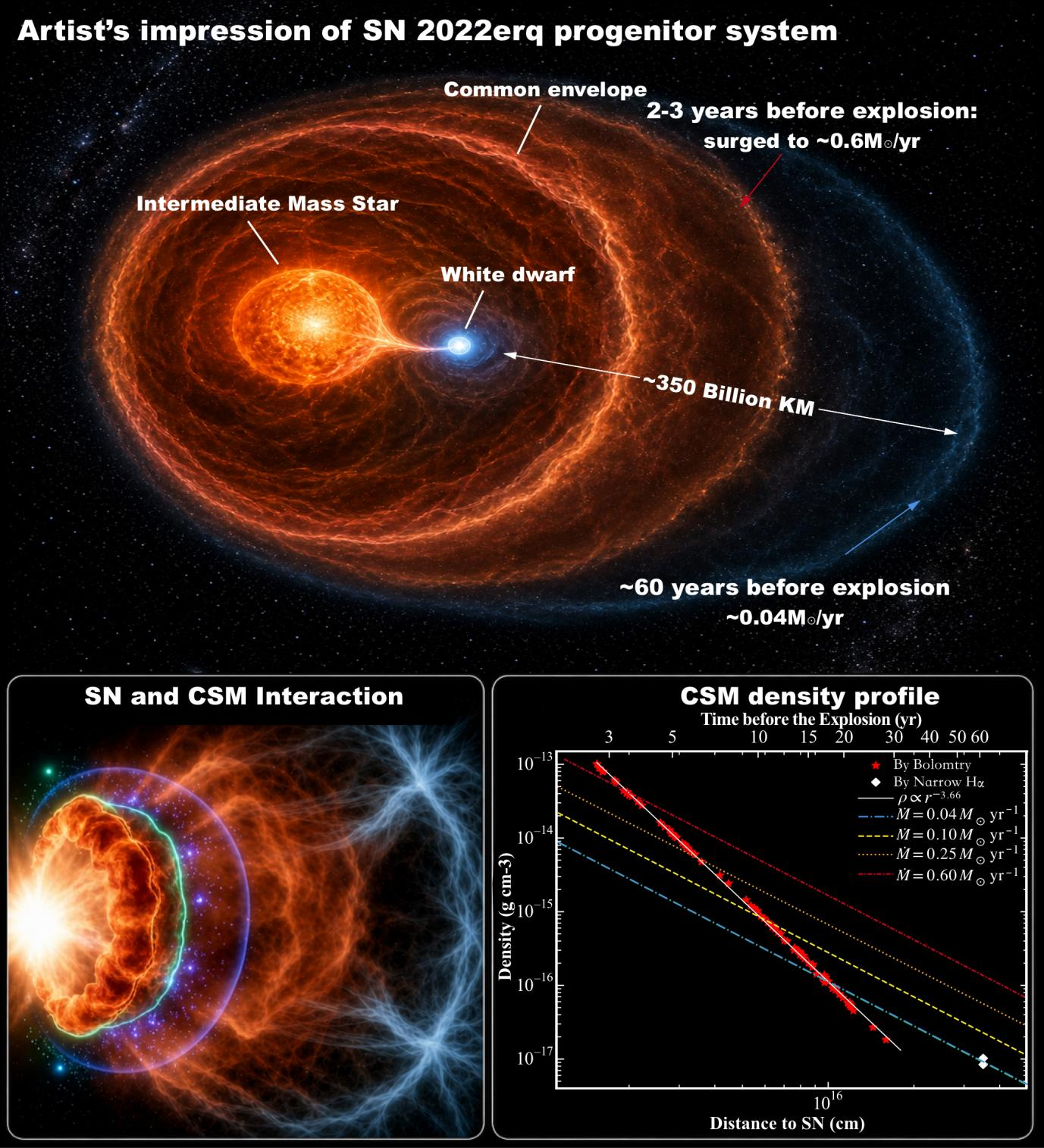 Researchers Reveal Sharp Rise in Mass-Loss Rate Before a Rare Type Ia Supernova ExplosionResearchers led by Dr. ZHAI Qian at Yunnan Observatories analyzed the Type Ia supernova SN 2022erq and reconstructed its pre-explosion mass-loss history. The mass-loss rate rose from about 0.04 to 0.6 solar masses per year, forming a roughly 3 solar-mass shell. The extreme values challenge current progenitor models and suggest strong binary interaction.Sep 30, 2026
-
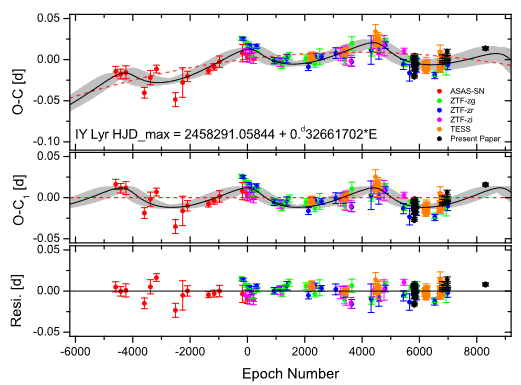 Study Confirms Compact Companion around the RR Lyrae Star IY LyrUsing multi-method observations, researchers from Yunnan Observatories and collaborators confirmed a 1.37-solar-mass compact companion around the RR Lyrae star IY Lyr. Combining O–C diagram, radial velocities, and Gaia astrometry, they derived an orbital period of 3.94 years and an inclination of 94.2°, favouring a neutron-star interpretation. The old, thick-disk star provides observational support for binary evolution channels that produce metal-rich RR Lyrae stars in the Galaxy.Sep 30, 2026
-
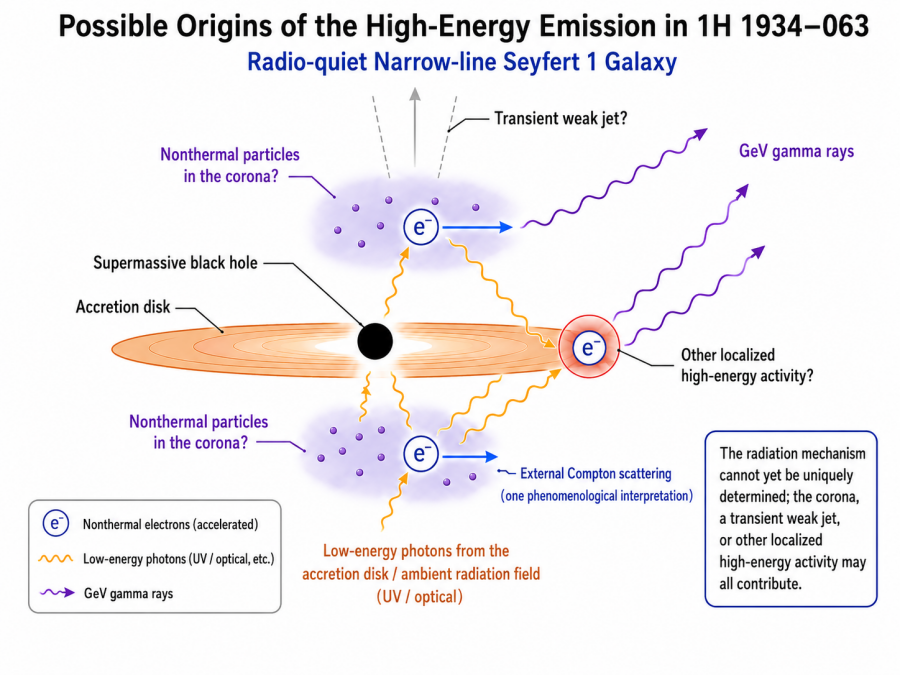 Study Reports Gamma-Ray Excess Toward Radio-Quiet Narrow-Line Seyfert 1 Galaxy 1H 1934-063Researchers analyzed nearly 17 years of Fermi-LAT data and reported a gamma-ray excess toward the radio-quiet narrow-line Seyfert 1 galaxy 1H 1934-063. The excess reached a test statistic of 27.12, about 5.2σ, in the 1–500 GeV band and was mainly concentrated at 8–63 GeV. Its physical origin remains uncertain, with external Compton emission offering an illustrative description.Sep 28, 2026
-
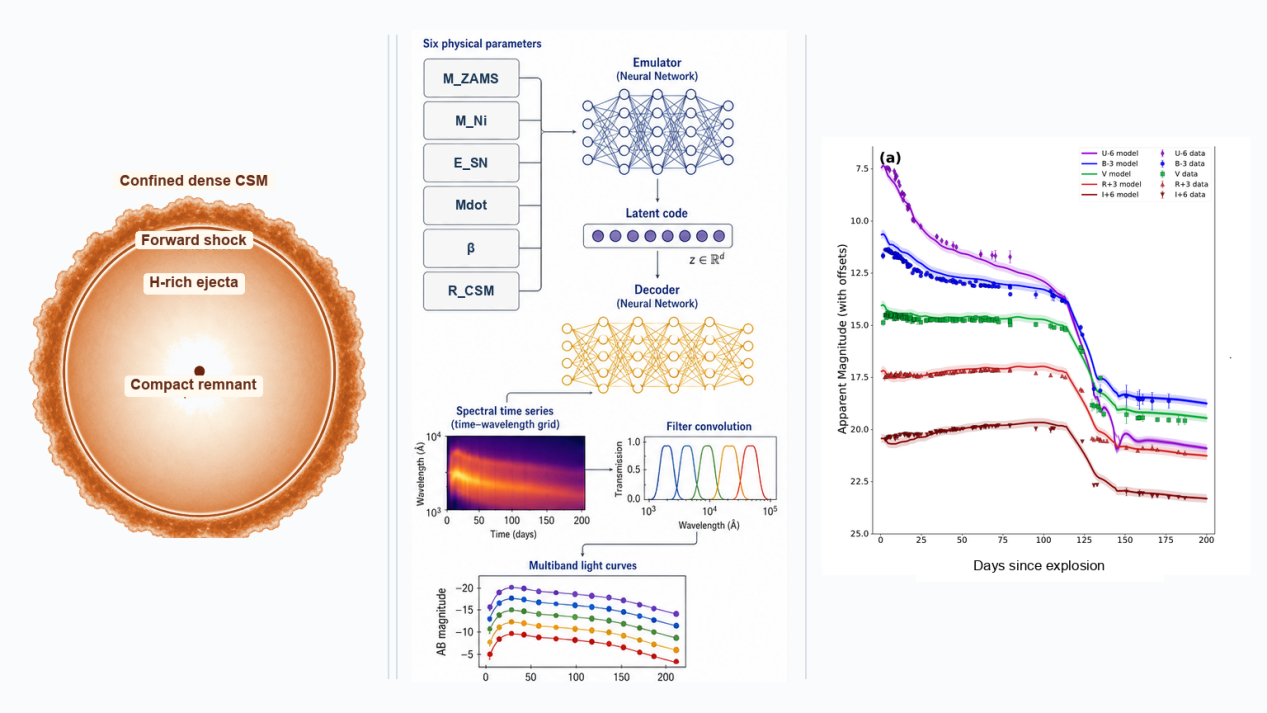 Research Advances Rapid Physical Inference for Type II SupernovaeResearchers at Yunnan Observatories developed two neural network surrogate models to accelerate physical parameter inference for Type II supernovae. Trained on STELLA simulation grids, the models generate multiband light curves with ~10⁻⁴ reconstruction error, reducing Bayesian inference time from days to minutes. Applied to SN 2005cs, SN 2012aw and SN 1999em, they yield progenitor masses consistent with observations and offer new insights into circumstellar interaction.Aug 18, 2026
-
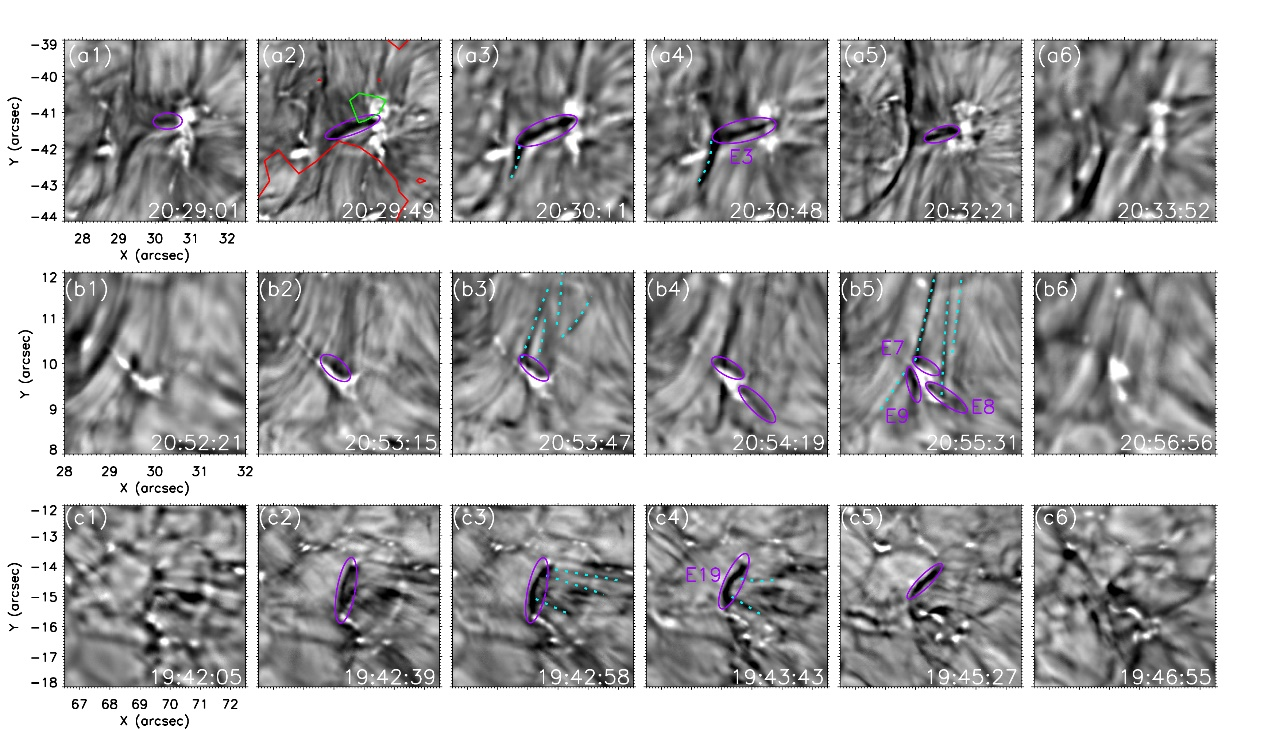 Study Reveals Microfilament Eruptions as the Driver of Solar SpiculesUsing high-resolution DKIST Hα observations, this study finds that solar spicules are triggered by microfilament eruptions, identifies two spicule morphologies linked to filament size, and supports a common eruptive mechanism across different spatial scales.Jul 08, 2026
-
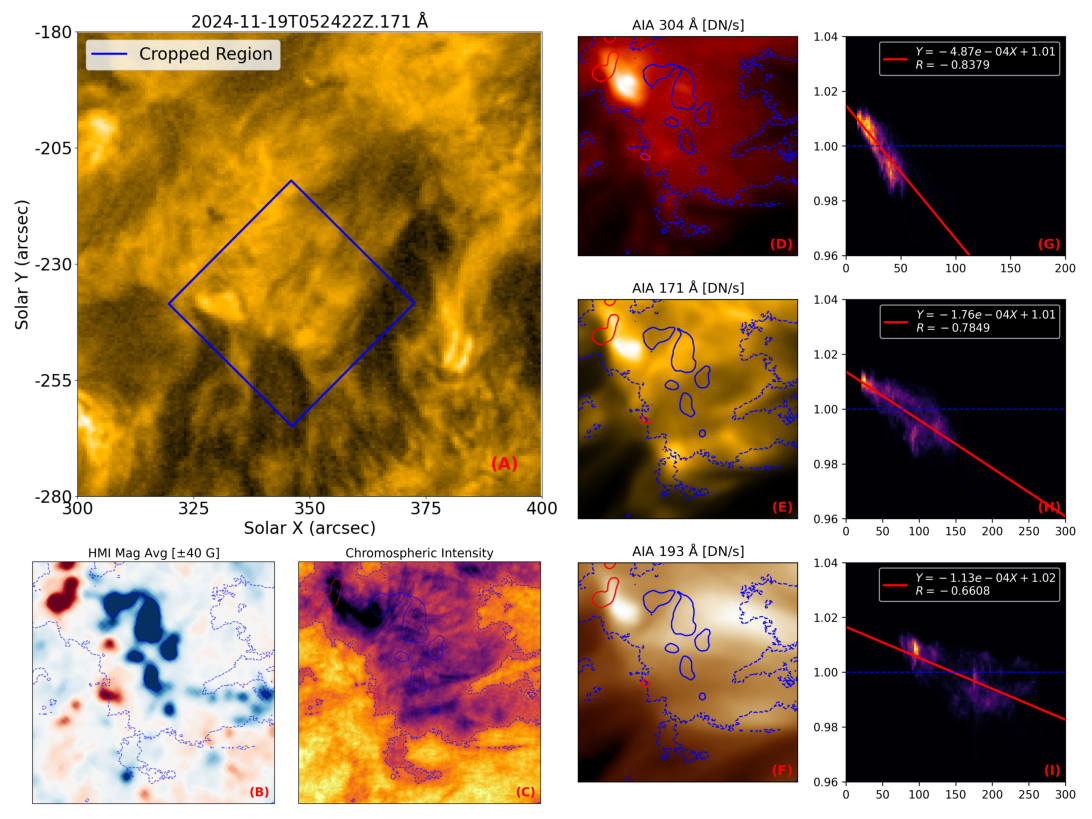 Study Separates Chromospheric and Photospheric Signals in NVST He I 10830 Å Observations via Deep LearningThis study presents a ResNet-based deep learning method that infers and removes the photospheric background from NVST He I 10830 Å images to extract chromospheric information, achieving significantly stronger negative intensity correlations with SDO/AIA EUV observations.Jul 03, 2026
-
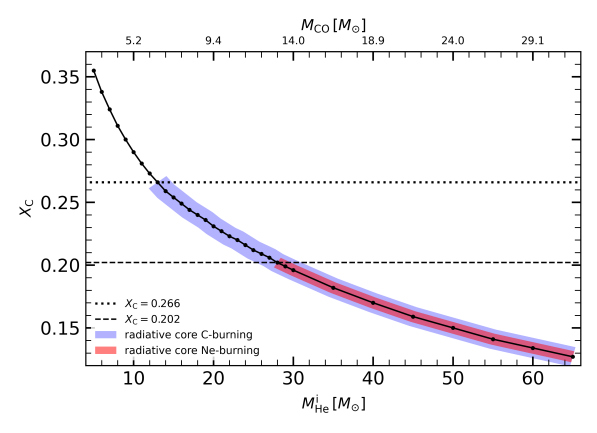 Researchers Investigate the Evolution of Massive He StarsPhD student LONG Gang and Prof. WANG Bo, from the Yunnan Observatories of the Chinese Academy of Sciences, along with their collaborators, have made progress in the evolution of massive He stars.Jul 03, 2026
-
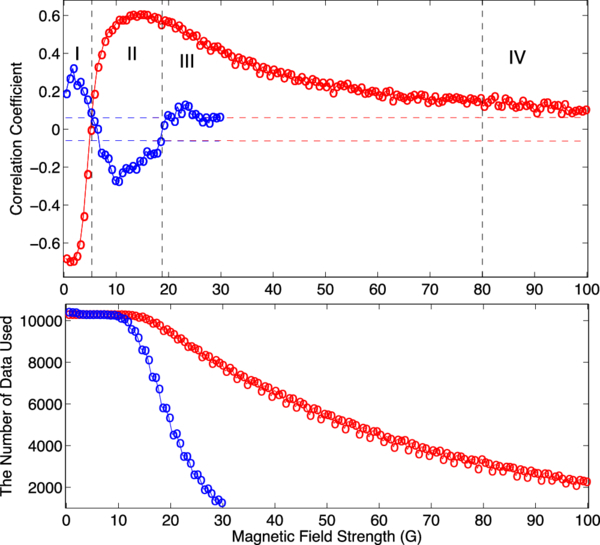 Researchers Reveal Janus-like Duality in Solar Magnetic ActivityBy analyzing full-disk super-synthetic magnetograms, researchers from the Yunnan Observatories have identified a critical threshold of 5.29 G that splits solar magnetic activity into two phase-opposite Janus faces—a strong field and a weak field—whose behavior reverses between high and low latitudes, revealing a previously unrecognized Janus cycle that permeates the entire solar atmosphere.Jun 16, 2026
-
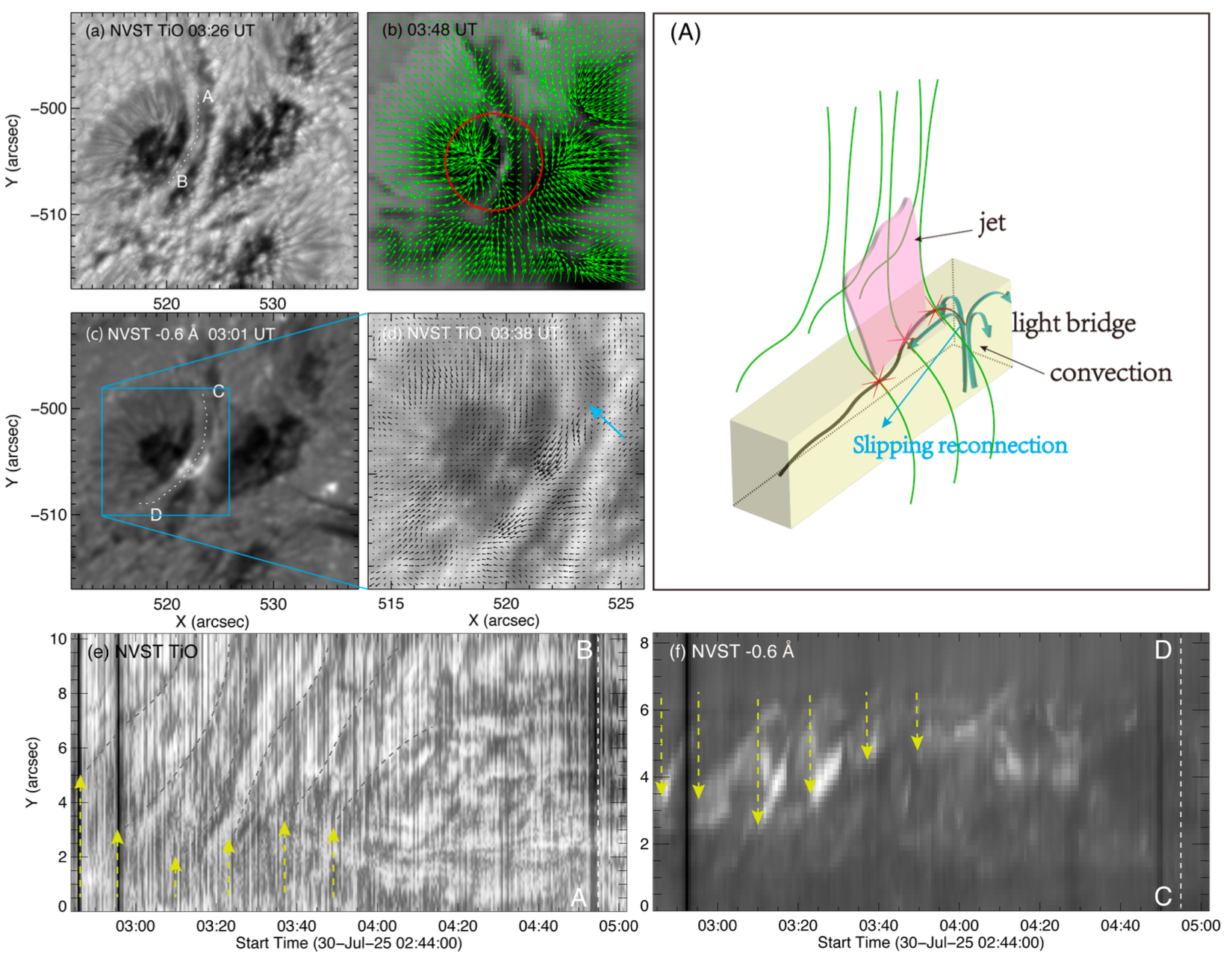 Study Reveals 3D Slipping Reconnection Driving Light Bridge JetsUsing observations from NVST and CHASE, researchers from Yunnan Observatories have revealed that recurrent light bridge jets are driven by three-dimensional slipping magnetic reconnection between horizontal light bridge fields and vertical umbral fields, a process modulated by quasi-periodic photospheric horizontal motions.Jun 08, 2026