


Professors
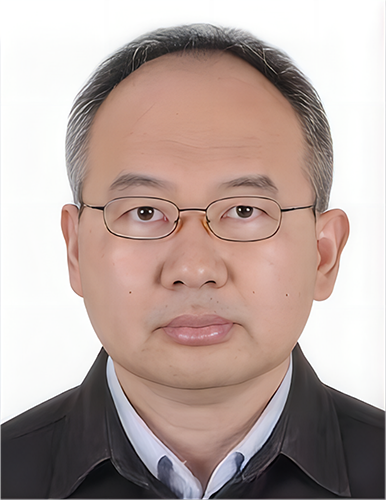
MENG Xiangcun / Researcher
Group of Binary Population Synthesis
Email:xiangcunmeng@ynao.ac.cn
Address:396 Yangfangwang, Guandu District, Kunming 650216, Yunnan, China
Expert:Professor
Educational:Phd
About
MENG Xiangcun, is a Researcher, Ph.D. Supervisor of Yunnan Observatories, Chinese Academy of Sciences. He was granted the Excellent Young Scientists Fund of the National Natural Science Foundation of China (NSFC) in 2015. His main research areas cover stellar physics, binary star physics, white dwarf accretion models, progenitors of Type Ia supernovae, accreting neutron star binaries, and corresponding large-sample stellar evolution. He has published 37 SCI-indexed research papers in major international astronomy journals such as The Astrophysical Journal (ApJ), Monthly Notices of the Royal Astronomical Society (MNRAS) and Astronomy & Astrophysics (A&A). His research achievements have been recognized with the Second Prize of the National Natural Science Award (3rd among 4 recipients) and the First Prize of the Yunnan Provincial Natural Science Award (2nd among 3 recipients).
Research Areas
Stellar Astrophysics
Publications
1.The environments of Type Ia supernovae with different relative equivalent width of Si II feature in their spectra , The Astrophysical Journal,2023
2.Hot subdwarfs from the surviving companions of the white dwarf + main-sequence channel of type Ia supernovae, Monthly Notices of the Royal Astronomical Society,2021
3.Blue Large-Amplitude Pulsators: the Possible Surviving Companions of Type Ia Supernovae,The Astrophysical Journal,2020
4.High-velocity feature as the indicator of the stellar population of Type Ia supernovae,The Astrophysical Journal,2019
5.Subdwarf B stars as possible surviving companions in type Ia supernova remnants, Monthly Notices of the Royal Astronomical Society,2019
6.Why Are Peculiar Type Ia Supernovae More Likely to Show the Signature of a Single-degenerate Model?, The Astrophysical Journal Letters,2018
7.Do SN 2002cx-like and SN Ia-CSM objects share the same origin?, The Astrophysical Journal,2018
8.A Polarization Sequence for Type Ia Supernova, The Astrophysical Journal,2017
9.A common-envelope wind model for Type Ia supernovae (I): binary evolution and birth rate, Monthly Notices of the Royal Astronomical Society,2017
10. The X-ray/radio and UV luminosity expected from symbiotic systems as the progenitor of SNe Ia,Astronomy and Astrophysics,2016
11. A pair of CO plus He white dwarfs as the progenitor of 2005E like supernovae,Astronomy and Astrophysics,2015
12. The Birth Rate of SNe Ia from Hybrid CONe White Dwarfs,The Astrophysical Journal Letters,2014
13. Constraining the Spin-down Timescale of the White Dwarf Progenitors of Type Ia Supernovae,The Astrophysical Journal Letters,2013
14. The birth rate of supernovae from double-degenerate and core-degenerate systems ,Astronomy and Astrophysics,2012
15. The birth rate of subluminous and overluminous type Ia supernovae,Astronomy and Astrophysics ,2011
16. The correlation between C/O ratio, metallicity, and the initial WD mass for SNe Ia,Astronomy and Astrophysics,2011
17. The envelope mass of red giant donors in type Ia supernova progenitors,Astronomy and Astrophysics ,2010
18. Companion stars of Type Ia supernovae with different metallicities,Monthly Notices of the Royal Astronomical Society,2010
19. A Comprehensive Progenitor Model for SNe Ia,The Astrophysical Journal,2010
20. A single-degenerate channel for the progenitors of Type Ia supernovae with different metallicities,Monthly Notices of the Royal Astronomical Society,2009
21. Initial-final mass relationship for stars of different metallicities,Astronomy and Astrophysics,2008
22. The Impact of Type Ia Supernova Explosions on the Companions in a Binary System,Publications of the Astronomical Society of Japan ,2007
23. WD plus MS Systems as Progenitors of Type Ia Supernovae with Different Metallicities,Publications of the Astronomical Society of Japan,2009
24. The Effect of Metallicity on the Delay-Time Distribution of Type Ia Supernova,Publications of the Astronomical Society of Japan,2011
Scientific Research
He has successively led 5 projects funded by the National Natural Science Foundation of China (NSFC), including a Key Program and an Excellent Young Scientists Fund project. He has also led one each of the Innovation and Interdisciplinary Team Program and the Key Program under the CAS "Light of West China" Program, as well as one Key Program of Scientific and Technological Research of the Ministry of Education of China.