Professors

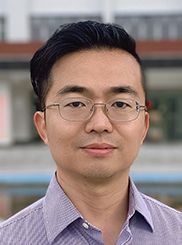
ZHANG Jujia
ZHANG Jujia / Researcher

Southern Astronomical Observatory

Email:jujia@ynao.ac.cn
Address:396 Yangfangwang, Guandu District, Kunming 650216, Yunnan, China
Expert:Professor
Educational:PhD

About

ZHANG Jujia mainly focuses on observational studies of supernovae and has identified nearly 300 supernovae using the Lijiang 2.4-meter telescope. In collaboration with other domestic and international telescopes, he has carried out research on various types of supernovae, achieving a series of results on the origins of supernova diversity and explosion mechanisms. He has published over 80 SCI papers. He is a member of the Youth Innovation Promotion Association, Chinese Academy of Sciences, and has received support from programs such as the Yunnan Provincial Xingdian Talents Plan and the CAS Western Light Program.

Research Areas

Stellar physics, time-domain astronomy 

Publications

1. Zhang Jujia, Lin Han, Wang Xiaofeng, et al. Circumstellar Material Ejected Violently by A Massive Star Immediately before its Death, Science Bulletin, 2023, 68, 21
2.Zhang Jujia,Wang Xiaofeng, Jozsef Vinko, et al. SN 2018zd: an unusual stellar explosion as part of the diverse Type II Supernova landscape, MNRAS, 2020, 498, 84
3.Zhang Jujia, Wang Xiaofeng, Jozsef Vinko, et al. Optical Observations of the Young Type Ic Supernova SN 2014L in M99. ApJ, 2018, 863, 1
4. Zhang Jujia, Wang Xiaofeng, Sasdelli Michele, et al. A Luminous Peculiar Type Ia Supernova SN 2011hr: More Like SN 1991T or SN 2007if? ApJ, 2016, 817, 114 
5.Zhang Jujia, Wang Xiaofeng, Mazzali Paolo, et al. Optical and Ultraviolet Observations of a Low-velocity Type II Plateau Supernova 2013am in M65. ApJ, 2014, 797, 5
6.Zhang Jujia, Wang Xiaofeng, Bai Jinming, et al. Optical and Ultraviolet Observations of the Narrow-lined Type Ia SN 2012fr in NGC 1365. AJ, 2014, 148,1

Scientific Research

He has led 3 projects funded by the National Natural Science Foundation of China, participated in 3 others, and has also been involved in 1 project of the National Key Research and Development Program.